Restaurant owners open the monthly P&L then looks over sales, then skips to the bottom line and then closes the P&L.
Sounds familiar?
The report could be completely correct, but if they are the only two figures being reviewed, the majority of its worth is left on the table.
They shouldn’t be more dependent on a accounting firm. They should be more confident about their numbers. You don’t have to know every accounting rule or spend nights entering invoices. You should know how profit has changed in relation to food and labor costs, and the issues that need to be addressed next week.
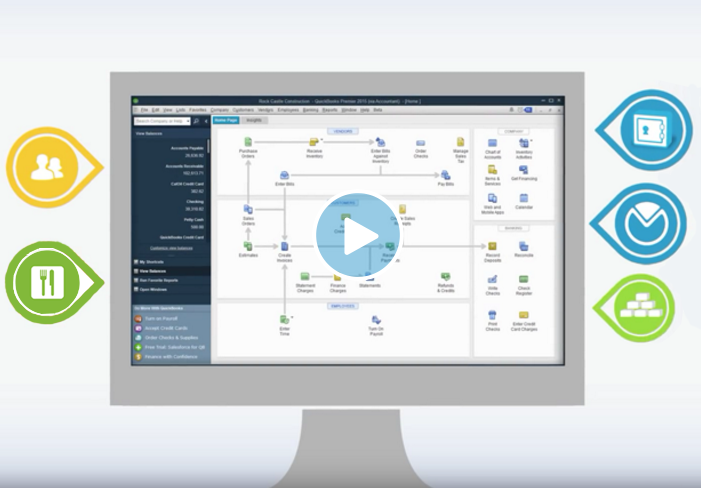
Bookkeeping Chef is a computer program that helps automate bookkeeping so owners can spend more time doing other things and receive clearer financial reports.
Do Not Stop at the Month-End Numbers. Begin with Weekly Numbers
While restaurants don’t operate on a calendar month, they must still have a P&L. Managers schedule labor this week. Chef orders food today. Vendors change prices now.
Bookkeeping Chef offers weekly flash reports on top costs along with monthly financial statements.
Prime cost is the sum of two important areas that can be swiftly relocated in a food service establishment: cost of the goods that are sold, as well as labor. According to information offered by Bookkeeping chef, prime costs represent approximately 60% of sales in restaurants.
Consider a situation where sales aren’t even changing while the prime cost is rising. This percentage isn’t an answer. It gives the person in charge a reason to look into the issue.
Have the hourly wages increased? Was there an overtime? The cost of food changed? The invoice from the vendor seemed oddly big? Changes in the sales mix?
This is far more beneficial than finding the same issue several weeks later.
Automate repetitive tasks
The DIY bookkeeping process doesn’t have to be limited to manually moving POS figures into spreadsheets.
Automating restaurant bookkeeping can help with the frequent movement of financial information. The service connects systems including POS Payroll, QuickBooks, POS vendor platforms inventory and recipe management as well as AP/payment tools.
Automating solely for the sake automated is not the aim.
The goal is to eradicate the need for manual data entry and to keep financial records current so that the owners are able to take more time in reviewing the information instead of assembling it.
This creates a new model of bookkeeping in restaurants. The system handles more of the mechanics, while the owner remains involved with the financial implications.
If you have more questions, you can ask them regarding P&L
A P&L will be much more manageable when you stop treating it like an accounting test.
Start with the sales. Next, look at the costs of production. Compare the food and beverage industry’s performance. Consider the labor. Examine labor.
And, most importantly, compare times.
Something in between has changed if sales have increased, but profit has not. What happened when food prices rose? Check sales and staffing to see if the labor percent has changed. Find out if a figure seems odd, rather than assuming that the restaurant experienced poor performance.
Bookkeeping Chef will send monthly P&Ls that are completed in five business days. This gives owners an opportunity to review recent results rather than receive financial statements after the operating period is completed.
For owners searching bookkeeping restaurant solutions, speed is useful but understanding is the bigger objective.
You don’t need to be a pro by doing it yourself
You don’t have to become your own bookkeeper full-time if you want to avoid transferring the entire financial responsibility to another person.
You are able to be the business owner, but not have to do every accounting task by hand.
This could mean connecting to automated systems to ensure that information is flowing by reviewing a weekly prime-cost report, studying the monthly P&L and asking questions when something moves unexpectedly.
The specialization in restaurant bookkeeping can assist with this method by making sure the books are in order as well as helping the owner know what they are.
This does not mean that the bookkeeper will be in a position to complete all bookkeeping functions.
The owner should be able to sit down with an P&L and have a stimulating conversation about their business.
The goal is Financial Independence, Not More Reports
Restaurants already generate huge quantities of data. Another dashboard doesn’t have to be a necessity.
The real value is when an operator can look at the weekly report of prime cost and recognize that something was different, then look at the P&L and know where to investigate further.
Bookkeeping Chef’s approach to bookkeeping includes restaurant accounting automation, daily reports, monthly P&Ls as well as specific financial assistance for restaurants to make this process possible.
Automate the repetitive work. Review prime costs every week. Learn to understand the same language as your P&L.
You do not need to be an accountant to be an.
It is crucial to know the financials of your restaurant before you are able to become the proprietor.