The wastewater lift station in a municipality is old. The pumps are approaching the expiration date of their service life, and the controls require modernization, and the access hatch is deteriorating. Even though the concrete wetwell is structurally sound, it needs to be updated.
Do you think the station should be demolished and rebuilt? Not necessarily. The better question to ask is whether or not the current infrastructure will support an efficient pumping system that is in line with current standards without compromising reliability or capacity.
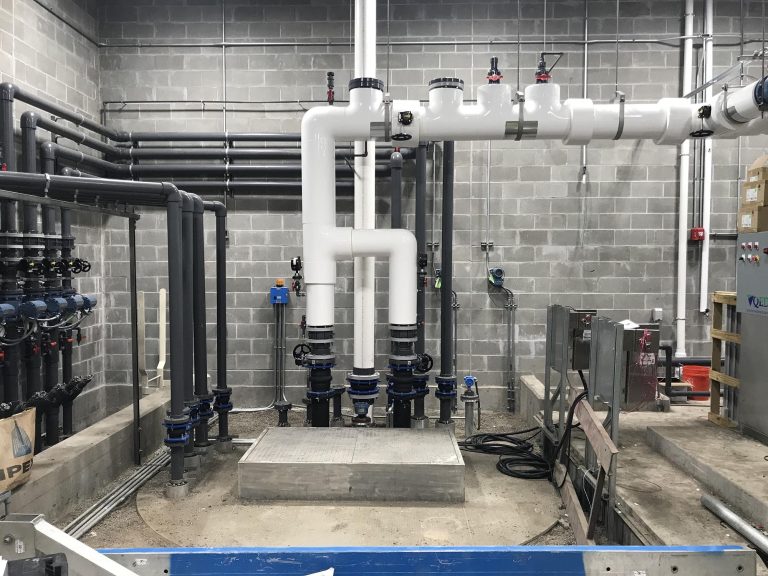
Image credit: romtecutilities.com
A carefully engineered pump station retrofit can preserve valuable infrastructure while replacing components that no longer meet operational requirements.
Begin with the structure that no one wants to replace
Wet wells are typically the most expensive and difficult component to replace as they are submerged and linked to existing pipes, and essential to the collection of wastewater.
The retention of a concrete structure that is functional can minimize the digging and construction.
However, deterioration near the access hatch may complicate your decision. Romtec Utilities identifies wet well hatch replacement as a typical retrofit requirement. It might be more reliable to remove the top slab rather than attach a new hatch to a deteriorated concrete. This can increase access to the structure and prolong its usefulness, without having to replace the entire structure as well.
A More Powerful Pump Changes the Engineering
Let’s say a residential area has exploded in size since the original lift station was installed. The current pumps might not be able to handle the demand to handle the increased flow of wastewater.
A station’s upgrade may be accompanied by higher horsepower pumps. However, equipment selection isn’t a part of the rest of the system. To get more powerful pumps there is a possibility that you will need to make changes to the discharge elbows, or pipes. It is also possible to replace electrical controls or valves.
Engineers should also assess the system’s hydraulic requirements including flow and total dynamic head. Installation of a larger pump without considering the circumstances may cause more issues than it solves. The ability to plan future capacity prior to initial design can make future expansion easy.
Make sure that the wastewater is moving during construction.
Retrofitting a wastewater pump station can be an entirely new challenge. As with other equipment replacement projects, this one must continue to operate for the duration of construction.
Even if contractors are busy and preparing for the next project, wastewater is still arriving. According to the scope of the project temporary bypass pumps might be required in order to maintain operation during the removal and installation of existing equipment.
Romtec Utilities fought this kind of problem in the Federal Law Enforcement Training Center at Brunswick, Georgia.
The project included replacing two aging wastewater lift stations and ensuring the operations of the facility. Site-specific engineering as well as packaged systems and bypass pumping techniques made it possible to meet existing station footprints as well as operational needs. This illustrates why it is crucial to think about the sequence of construction before installing.
When the Alternative is the Best Alternative
Not every station can be restored. A severely deteriorated wet well structure that is not strong enough, or significant changes to hydraulic requirements could make an upgrade to a sewer lift station better than making changes to the existing structure.
The choice should take into account the condition of the structure, compatibility with equipment access to construction to the site, service continuity, and long-term operating needs. Romtec Utilities starts retrofitting and replacing projects by identifying elements that will remain and those that must be replaced.
The company will create specific engineering plans for the site, budget estimates, as well as preliminary designs. Prefabricated components are also able to help facilitate installation and cut down on on-site construction requirements.
The Project isn’t Complete until the Pumps are Set to Start
A modernized lift station must function as a system in one. Before returning a lift-station to normal service, restart testing, commissioning, as well as verification of the equipment are essential to confirm that all pumps, controls and equipment work in accordance with their design.
Both manuals and training for operators are equally essential. Maintenance personnel need to understand the latest equipment, operating procedure, and documents before they can assume responsibility for the station.
An effective retrofit will preserve structures that are still useful as well as addressing the weaknesses which led to the need for modernization.
For facility owners and municipalities, that means looking beyond the immediate repair. The most successful plan is one that integrates the new equipment into existing structures, keeps up with essential service during construction, and also prepares the pumping system for years to come of operation.